Turtle Hatchlings Guide
When you join us in Borneo, I want you to experience more than the diving, and this turtle hatchlings guide introduces one of the visits we include. On Sangalaki, we visit the turtle sanctuary and conservation project. Seeing how small these animals are at the beginning of their lives gives you a very different view of the turtles we watch on the reefs.
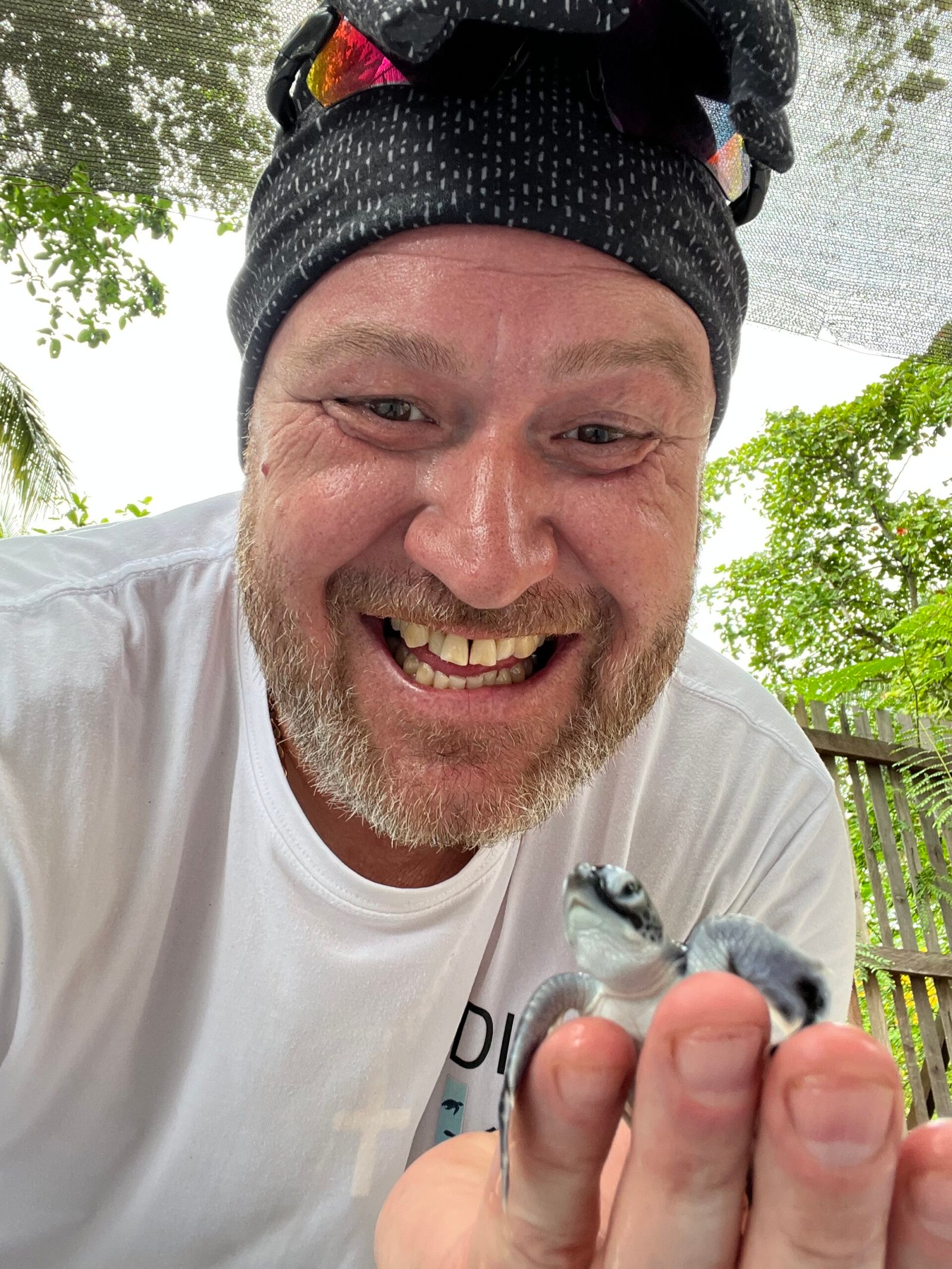
We have spent time there ourselves, and the photographs on this page are from our visits. I want to share that experience with you: what happens beneath the sand, how the hatchlings emerge and why the work on the beach matters. Our local knowledge helps us bring the visit and your diving together as part of your Borneo holiday.
Have a look at our turtle sanctuary page for the visit itself. Here, I will explain the early stages of a turtle’s life so that, when we go, you can understand more of what you are seeing and ask the team about their work.
Turtle hatchlings guide: names and beginnings
Turtle hatchlings: a life stage
A hatchling is a newly emerged young animal, not a special kind of turtle. For example, green turtle hatchlings are Chelonia mydas, the same species as the large green turtles we see underwater.
Likewise, a hawksbill hatchling is Eretmochelys imbricata. So, its small size does not give it a different scientific name.
A guide to the names we use
When we talk about green turtles, the name refers to the colour of their fat, not a promise that the shell will be green. Meanwhile, a hawksbill takes its name from its pointed beak. Its scientific name, imbricata, refers to the overlapping shell plates.
These details help connect the little turtles at the sanctuary with the adults you may see during your diving. I want you to be able to recognise more than just a small turtle, and to understand which animal it will grow into.
- Hatchling means
- A newly hatched animal
- Green turtle
- Chelonia mydas
- Hawksbill
- Eretmochelys imbricata
- Incubation
- Usually several weeks
- Parental care
- No mother guarding the nest
- Where we go
- Borneo
Your guide to our Borneo sanctuary experience
We visit the turtle sanctuary on Sangalaki during our Borneo holidays. It adds something very different to the diving: a chance to spend time at a conservation project and learn about the beginnings of the animals we enjoy seeing underwater. Our Maratua, Kakaban and Sangalaki page introduces the islands, while the Borneo destination guide gives you the wider picture.
If turtles are one of your main reasons for coming, tell me when we plan your Borneo holiday. We can explain the sanctuary visit alongside the reefs and other experiences you can enjoy with us.
The project team looks after the activity on the day. Hatching and release are different events, and natural timing affects what we see. We will explain that properly before the visit, so you know what to expect and can enjoy learning from the people doing the work.
A guide to the turtle hatchlings lifecycle
A guide to turtle hatchlings emerging
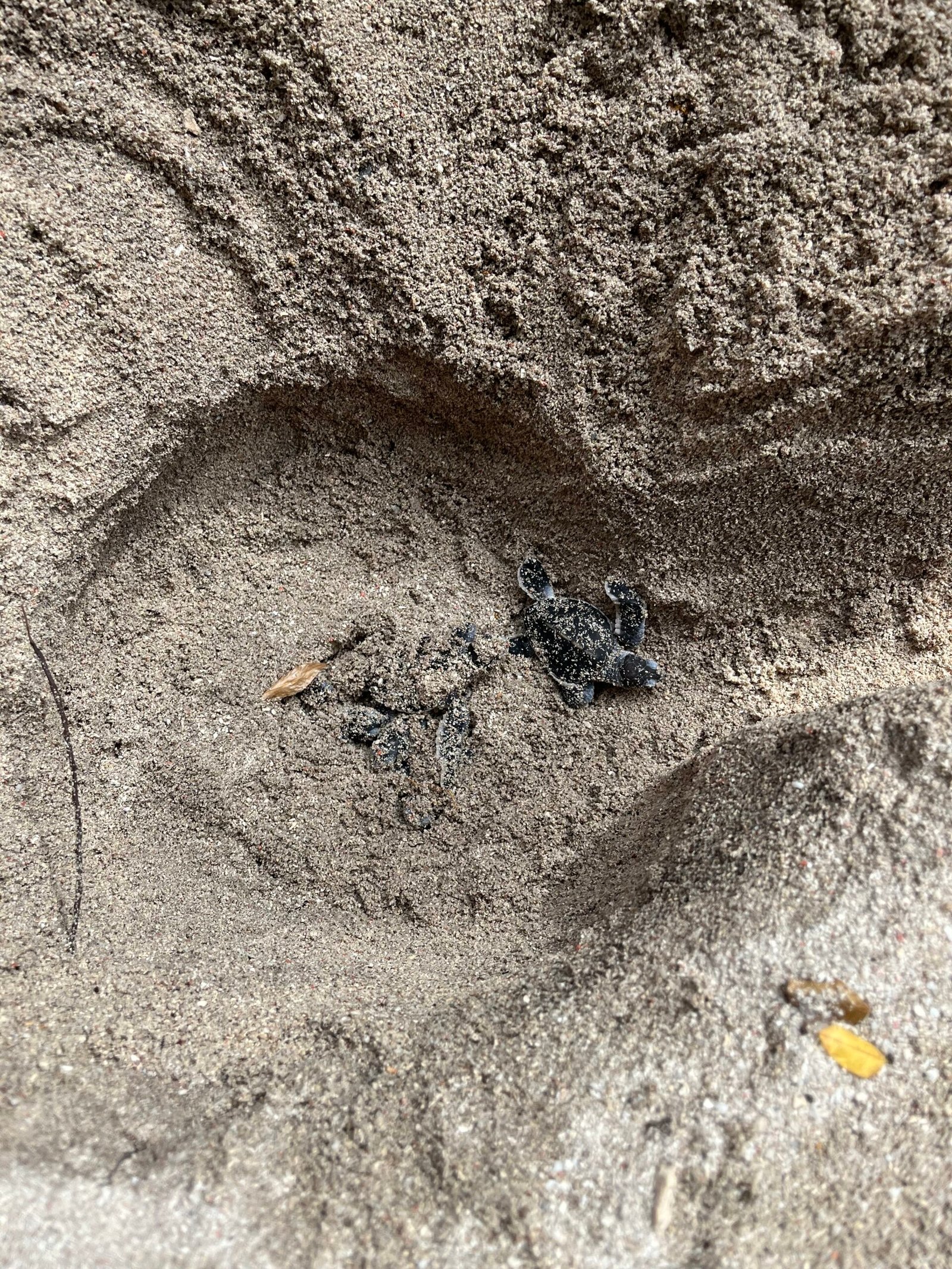
A hatchling uses a temporary egg tooth to open its shell. However, that is only the first step. It must then work through the sand above the nest before it can appear on the beach.
Young turtles may emerge together, often when conditions are cooler. So a predicted hatching date is a guide rather than an appointment. We follow the sanctuary team’s knowledge and explain what is happening when we visit.
The beginning of a much longer journey
The first swim is only the start. Once a hatchling reaches the sea, currents, food and predators influence what happens next. There is a long journey ahead before it becomes one of the large turtles we watch feeding or resting on a reef.
Many sea turtles take decades to reach breeding age. That is why we talk about more than the moment a hatchling enters the water. The sanctuary visit helps put those early stages into context, while our diving lets us see another part of the same life.
Turtle hatchlings guide to eggs and incubation
How does a nest begin?
Before nesting, adult turtles mate in the water. Later, the female comes ashore, digs a chamber in the sand, lays her eggs and covers them. Afterwards, she returns to the sea.
However, she does not wait nearby to help the babies emerge. Instead, the eggs develop without that kind of parental care.
Temperature and time beneath the sand
The eggs often take roughly two months to hatch, but species, temperature and moisture affect the timing. Within a suitable temperature range, warmer nests generally produce more females and cooler nests more males. However, too much heat can harm the developing eggs.
When we visit, the team can explain the nests and conditions they are working with. We leave the eggs and nest management to them. It is a chance to learn from their knowledge, rather than treating an expected hatching date as a fixed appointment.
Turtle hatchlings feeding guide
Inside the egg, the developing turtle gets its nourishment from yolk. Some remains available around emergence, helping support the early journey into the water. That small animal has already been growing long before we see it.
Later, it must find suitable food. Young turtles do not always eat like adults; young green turtles, for example, can have a broader diet before becoming mainly grazers. So the food it needs changes as it grows.
During a visit, we do not offer food to keep a hatchling close. The sanctuary staff decide how animals in their care are managed. We follow their instructions and take the opportunity to learn about the process.
Turtle hatchlings guide to the journey to sea
On a natural beach, the brighter, open horizon towards the sea helps hatchlings find their way. Artificial lights can confuse them or draw them inland. That is why phones, lights and flash photography need particular care.
We follow the team’s instructions, avoid flash and keep the route clear. Give the turtles space, even when you are excited to get a photograph. Watching the journey is more important than surrounding an animal for a picture.
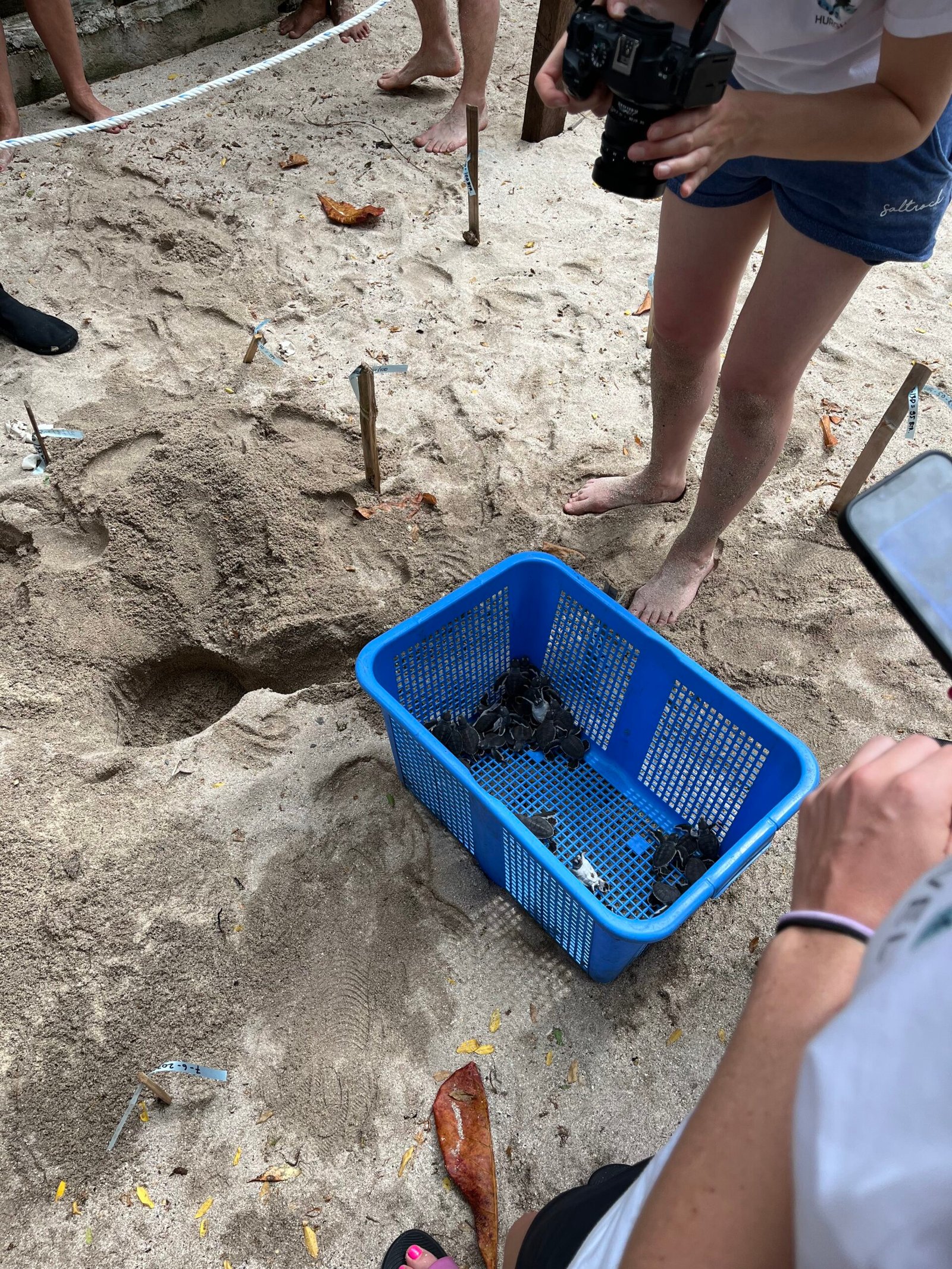
At the sanctuary we visit, staff may supervise visitors helping to collect newly emerged hatchlings into a basket. This is a managed activity under their direction, not something to repeat with wild hatchlings elsewhere. Our photographs show our own visits, but the activity available can differ when we return.
Turtle hatchlings conservation guide
Protecting a beginning, and what follows
When you see a hatchling, it is easy to concentrate on that one tiny animal. However, protecting its future means looking after much more than the nest. Beach development and artificial lighting can affect the start of its life, while fishing gear and pollution create threats at sea.
The adults also need healthy feeding areas and nesting beaches. So the work we learn about on Sangalaki belongs to a much bigger story. I want you to leave the visit understanding why those places matter, as well as remembering the turtles themselves.
Why we return and keep learning
We have visited the sanctuary ourselves, and we bring that experience into the way we plan your holiday. Our local relationships help us understand what the visit involves and what may be happening when we arrive. You can read more about our research and the time we put into getting to know our destinations.
For me, the value is in sharing that knowledge with you. You can enjoy the diving, visit Sangalaki and come home with a better understanding of the turtles. We work with the local team so you can ask questions and make the most of your time there.
Turtle Hatchlings Guide: your questions
Is a hatchling a separate turtle species?
No. Hatchling describes the beginning of an animal’s life after it leaves the egg. A green turtle hatchling is the same species, Chelonia mydas, as an adult green turtle. Likewise, a young hawksbill belongs to the same species as its parents. At the sanctuary, understanding that connection helps you picture what these tiny turtles could become. It also links the visit with the adults we look for during our diving.
Does the mother help the babies reach the sea?
No. After laying her eggs and covering the nest, the female returns to the sea. She does not wait for them to hatch or guide the young into the water. The hatchlings open their own shells and work their way through the sand before emerging onto the beach. That is one reason this stage is so interesting to learn about: they begin that journey without a parent beside them. During our visit, we can talk about the difference between this natural process and the conservation team’s work.
How long do turtle eggs take to hatch?
Often around two months, although the species and conditions in the nest affect the timing. Temperature and moisture both matter, so eggs do not all develop to a fixed timetable. Also, leaving the egg and appearing on the beach are separate steps; the young still have to move through the sand. We follow the sanctuary team’s knowledge when we visit and explain what is happening on the day. A predicted date can help with planning, but it cannot guarantee that we will witness hatching.
Is hatching the same as release?
No. Hatching is when the turtle breaks out of its egg. Release is a separate event within the sanctuary’s managed process, so seeing hatchlings does not necessarily mean watching them hatch or enter the sea. We explain these differences when we plan the visit with you. Our experience page describes what we have seen there and how the visit works. The activity available can vary, but there is still plenty to learn about the turtles and the project.
Can visitors handle the hatchlings?
Only when the sanctuary team specifically directs and supervises it as part of their managed activity. On our visits, staff have supervised visitors helping to collect newly emerged hatchlings into a basket. We follow their instructions, keep the route clear and avoid flash photography. However, a photograph from one visit is not a promise that the same activity will be available on yours. It also does not mean you should pick up wild hatchlings on another beach. We will explain the team’s guidance when we are there.
Come and discover the beginning of a turtle’s life with us
If you would love to include the turtle sanctuary in your Borneo holiday, come and talk to me. We can bring the Sangalaki visit together with the island diving and the other wildlife you want to see. Tell me what interests you and about your experience in the water, and we will help you plan the trip.
The photograph here is from my own visit. I want you to have the chance to learn about these animals with us, ask questions and see another side of Borneo. Then, when a turtle passes you on a dive, you will have a much better idea of where its journey began.
Explore our Borneo diving holiday