
Night diving in the Philippines · Malapascua and Dauin
Night Diving Philippines
Night diving in the Philippines ranks among our favourite experiences anywhere in the world. First, we dive in Malapascua, where we watch for a flash of blue and orange as the mandarinfish emerge. Next, we dive the black sand of Dauin, where even a patch of seagrass can hide an octopus in plain sight.
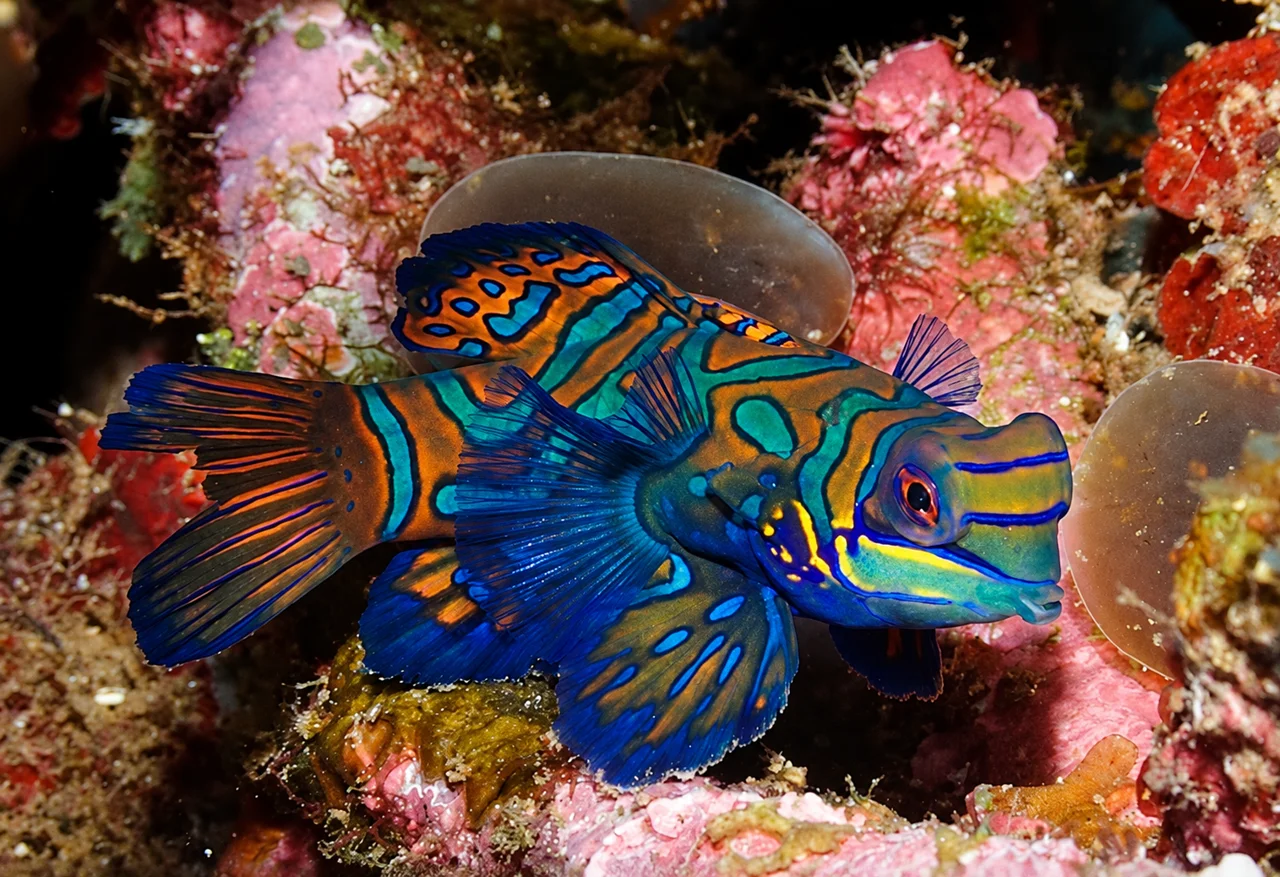
Night diving in the Philippines starts with Malapascua’s mandarinfish
Our first evening dive is all about one small fish. The mandarinfish has loops of turquoise and orange across its body, right down to the markings around its eyes. That’s why we make time for it on our Malapascua dives.
Dusk gives us a chance to watch a pair come together. If you’re lucky, you may see them rise briefly from cover to mate. Even a glimpse of a single fish slipping back into the reef is worth the wait.
Frogfish and octopuses on Dauin’s black sand
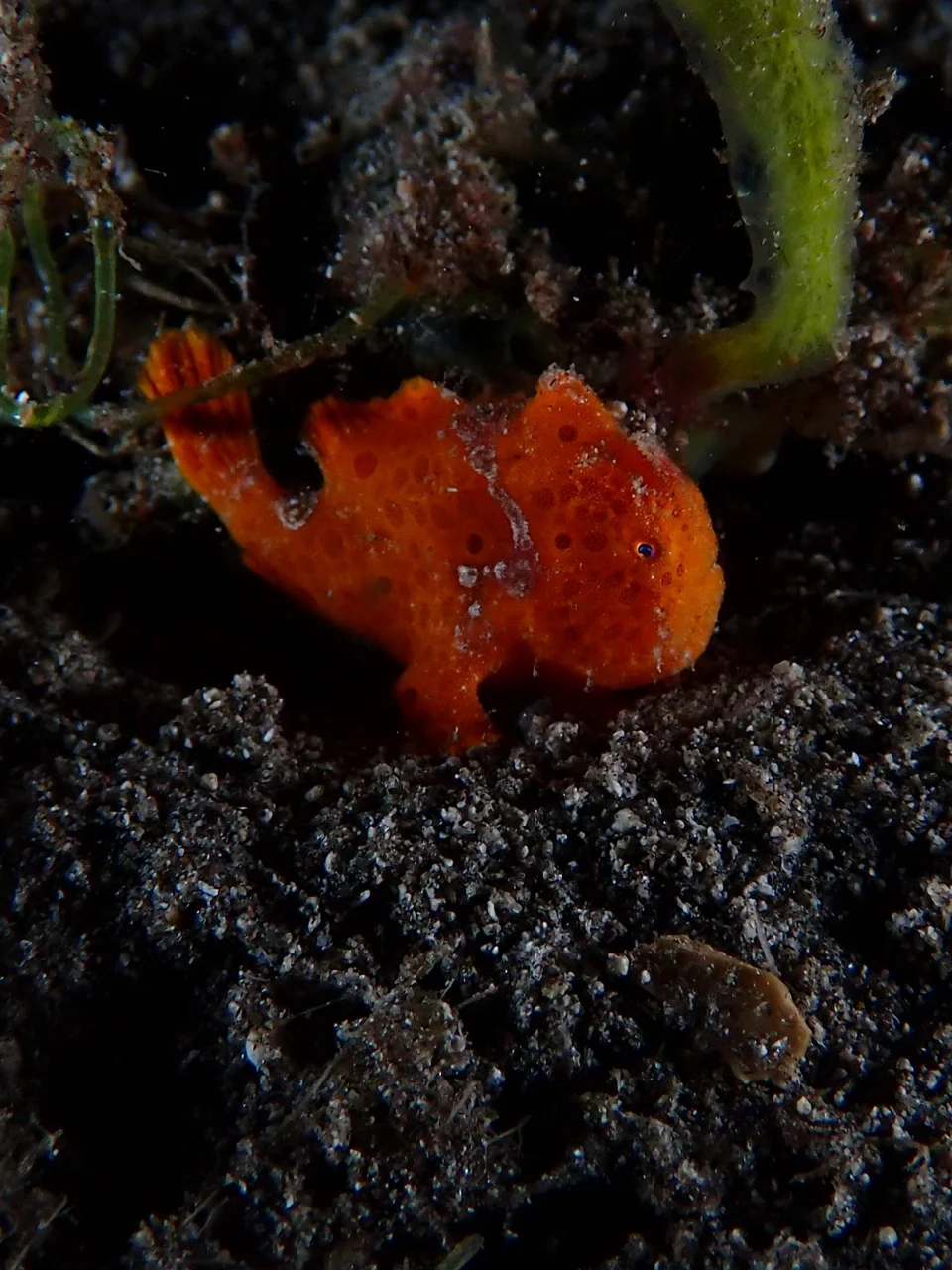
In Dauin, we spend the evening looking for a whole cast of critters. Crabs and shrimps come into view as we work our way slowly across the sand. Even so, frogfish can be surprisingly hard to pick out, even when they’re as orange as the one in our photograph.
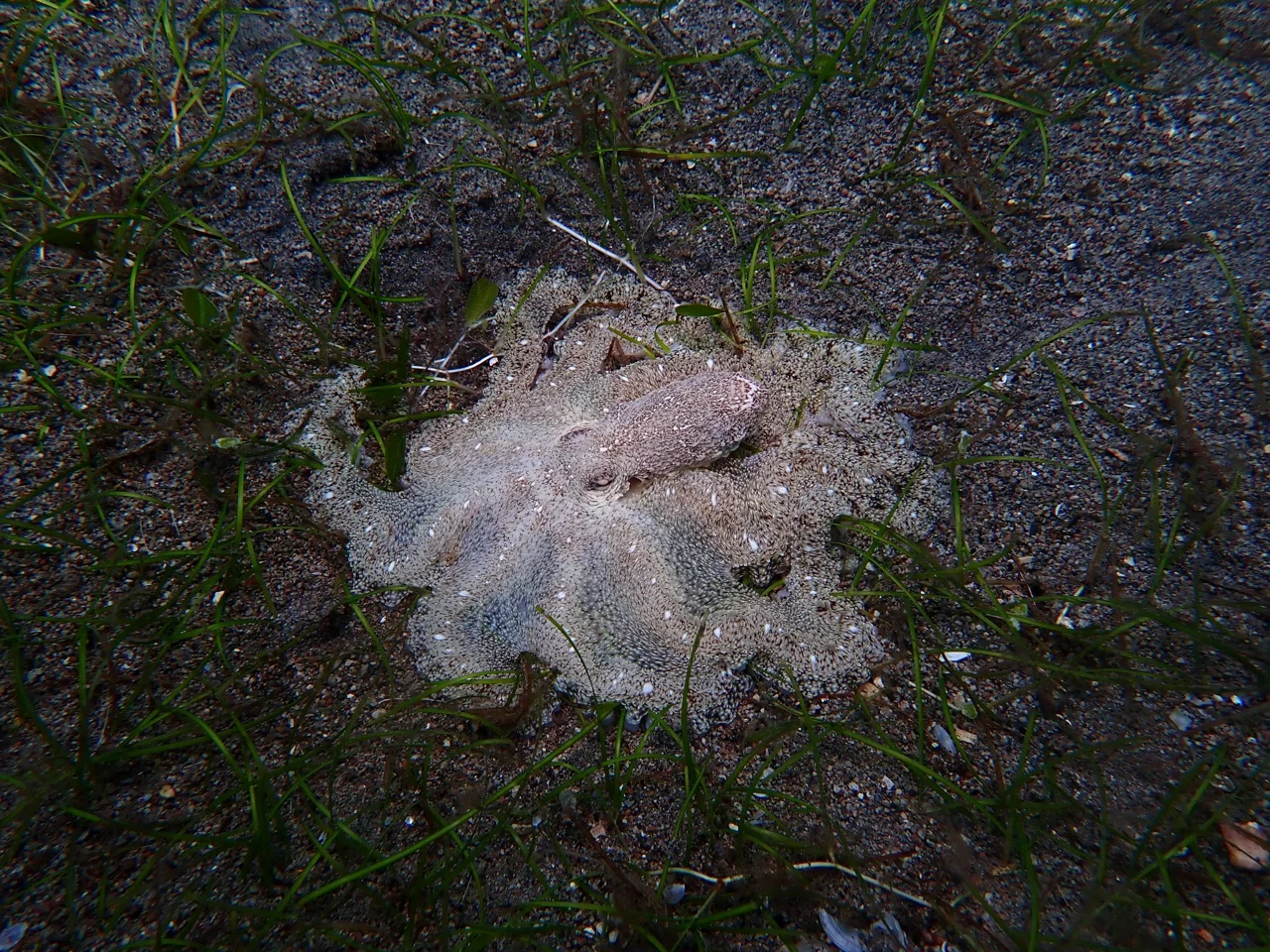
We look for several kinds of octopus here. For example, try spotting the eye in the photograph below. Then, when you see it, you can trace the outline of the arms against the seagrass. That moment of recognition is one of the things we love about diving here at night.
Looking closer at nudibranchs
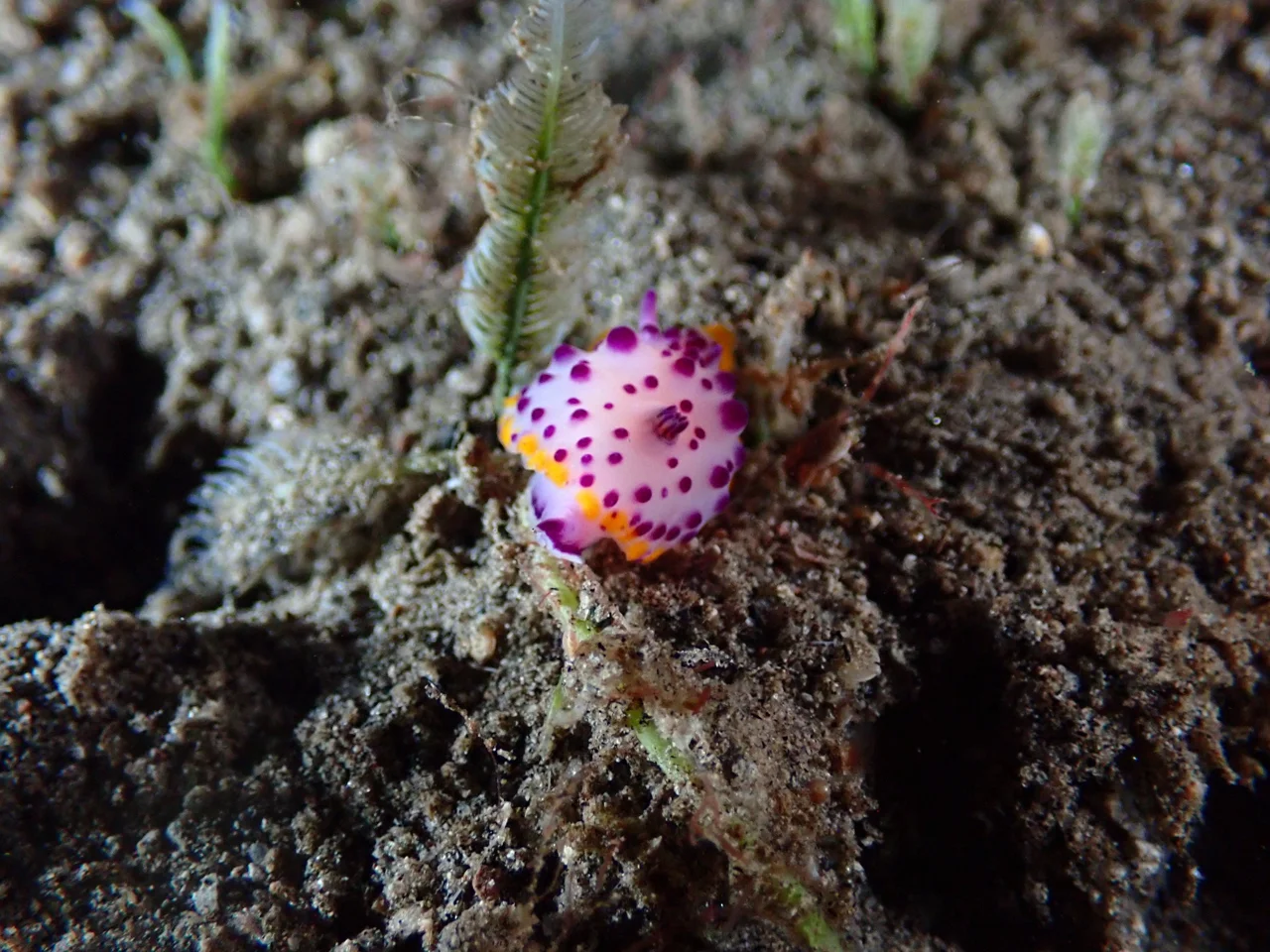
Sometimes colour gives an animal away before you can make out its shape. For instance, the purple spots on this little nudibranch caught our eye against the grey seabed. By contrast, others have frilled edges that blend in with the growth around them.
If you enjoy macro photography, these are dives where it pays to linger. For instance, spend a moment watching one animal and you have time to notice the details you’d miss while swimming past.
Eight night dives on our Philippines diving holiday
Our Philippines diving holiday includes eight night dives. We start with three in Malapascua, where dusk is our chance to watch for mandarinfish. At first, a flash of turquoise might be all you catch one evening. Next time, you might see a pair rise together above the reef.
Then we have five night dives in Dauin to explore the black sand. That gives us time to linger when we find something special. For example, you can spend a good part of one dive watching an octopus, then head out the next evening with frogfish, shrimps or nudibranchs on your wish list.
Who will enjoy night diving in the Philippines?
You don’t have to be a macro enthusiast to get caught up in these dives. Watch what looks like a patch of sand open an eye, stretch out an arm and reveal itself as an octopus. Afterwards, you start looking at the whole seabed differently.
Likewise, even without a camera, there’s a thrill in spotting something for yourself. A tiny crab picking its way through the seagrass can hold your attention long after the first sighting.
Your questions about night diving in the Philippines
Where do we look for mandarinfish in Malapascua?
We know two sites in Malapascua where we can look for mandarinfish at dusk. So we choose whichever is quieter that evening. That’s also one reason we charter our own private boat in the Philippines. As a result, we can take our group to the less crowded site and settle in to watch the reef as daylight fades.
Will we see the mandarinfish mating?
You might, but it takes patience. I’ve waited as long as an hour, hovering in the same spot, to see a pair rise together. Sometimes it happens sooner. However, it can take longer, or the pair slips out of sight. We keep our torch beams off the fish while we watch, so picking out that brief movement in the fading light is a real challenge.
What else might we see on a night dive in Dauin?
We see plenty of turtles in Dauin, along with several kinds of octopus and frogfish. Meanwhile, seahorses and flamboyant cuttlefish are among the animals we look for on the black sand. In addition, look closely for shrimps, crabs and nudibranchs too. Above all, the colours can be a surprise after dark, from the orange of a frogfish to the purple spots on a tiny nudibranch.
How deep do we go when night diving in the Philippines?
Our night dives in Malapascua are usually around 10–15 metres. By contrast, in Dauin we generally dive a little deeper, around 15–25 metres, as we explore the black-sand sites.
How warm is the water when night diving in the Philippines?
The water is tropical. On our Philippines diving holidays, we typically dive in water around 28–30°C.
Join us after dark in the Philippines
Is there a critter you’d love to see or photograph? Have a chat with Steve about the evenings we spend in Malapascua and Dauin.
Explore our Philippines diving holiday