
Diving Dauin
Diving Dauin is a joy if you love the small stuff. A shell on the black sand is worth a second glance. Look closely and you might catch an octopus looking straight back at you.
This is one of our favourite places in the Philippines to take a camera. We look for seahorses, frogfish, nudibranchs and flamboyant cuttlefish, and there are plenty of turtles to look up for along the way.
We like to dive the coast twice: once in daylight to get our eye in, then again after dark, when that same stretch of sand comes alive.
Explore the diving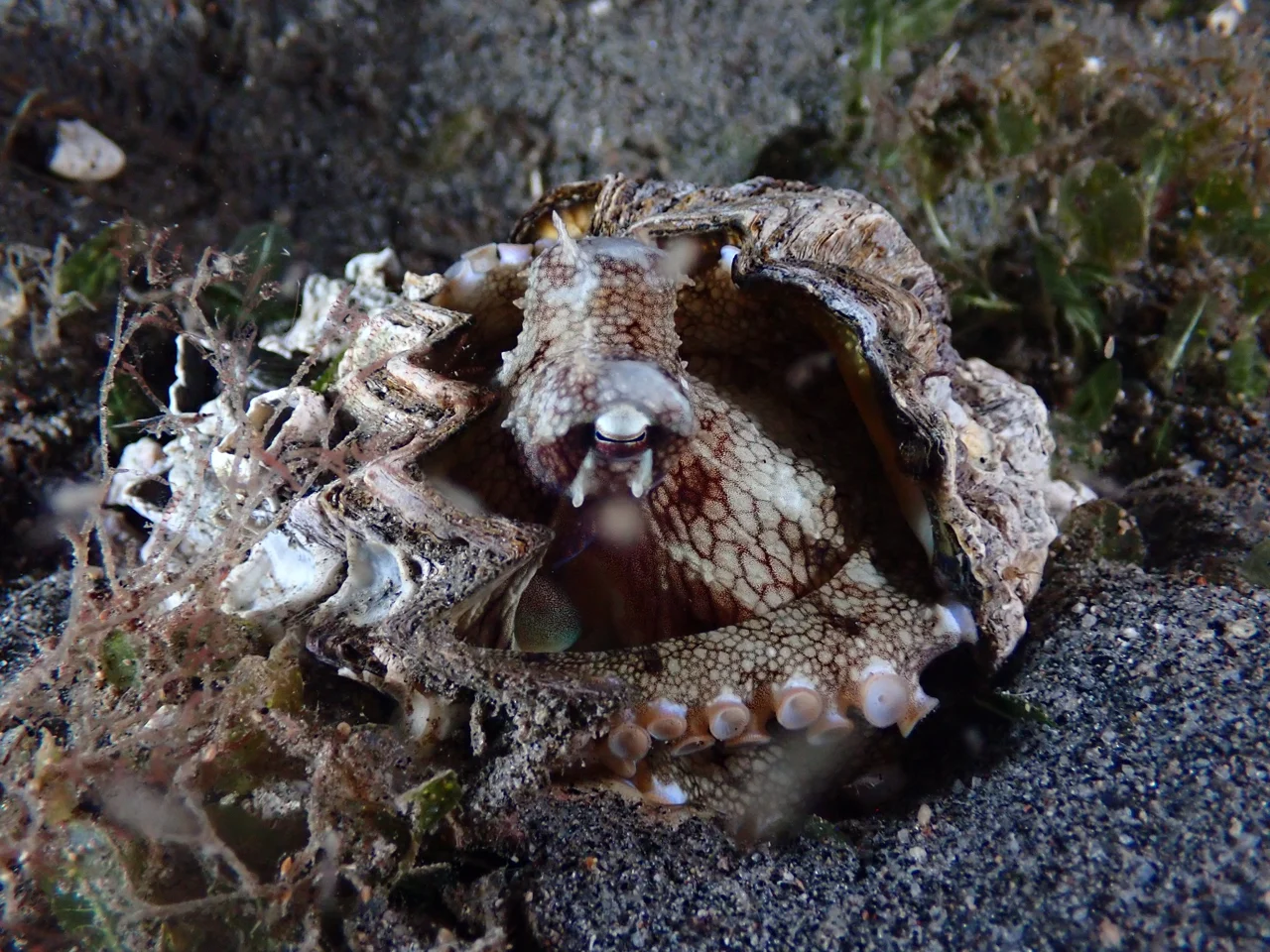
- Location
- Dauin, Philippines
- Seabed
- Black sand with patches of coral and seagrass
- Typical dive depths
- 15–25 metres
Macro photography on Dauin’s black sand
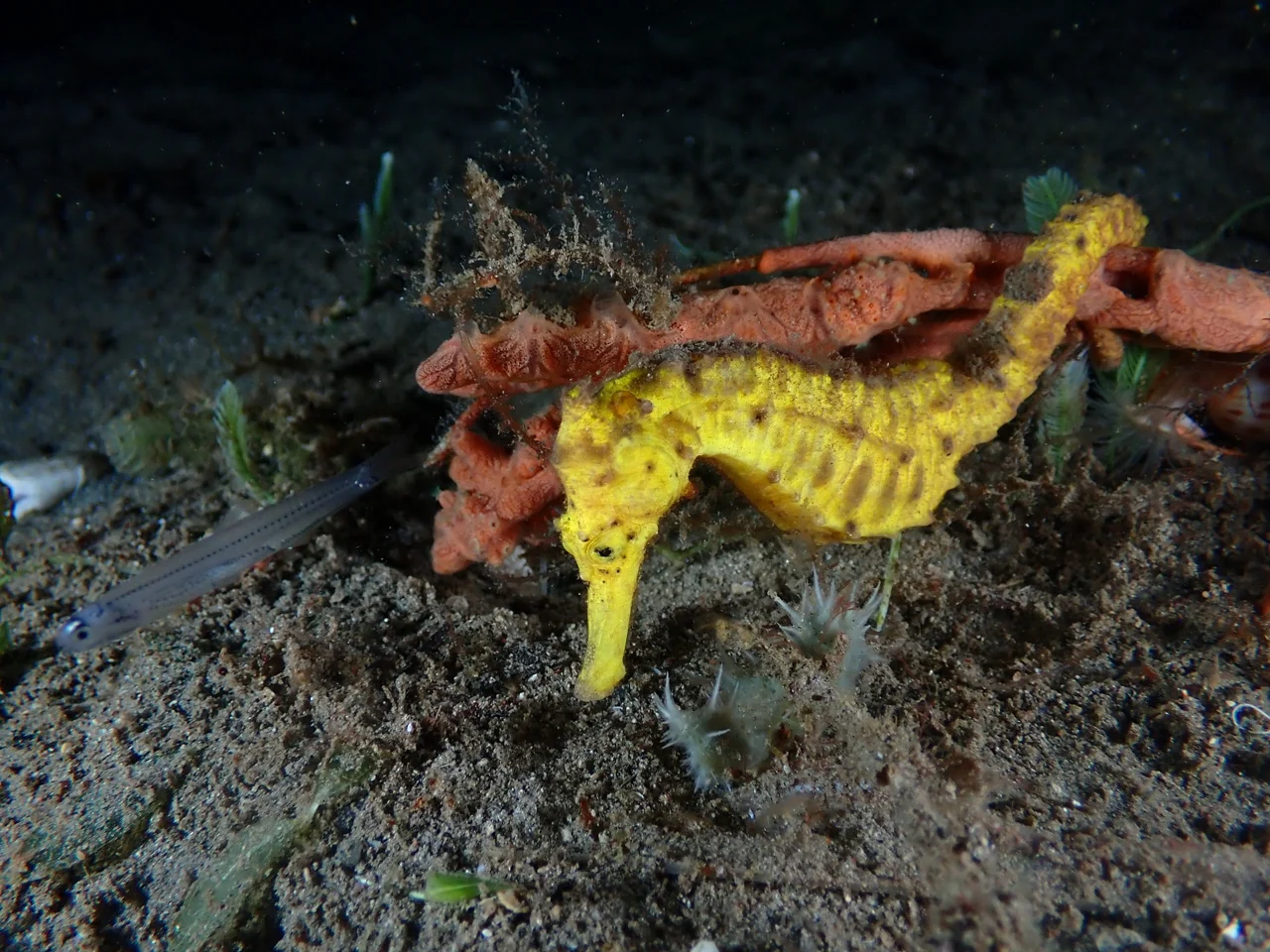
Dauin rewards the diver who lingers. Take the yellow seahorse in our photograph, for example. Its colour catches your eye first, but spend a moment with it and you notice its tail curled round the orange sponge.
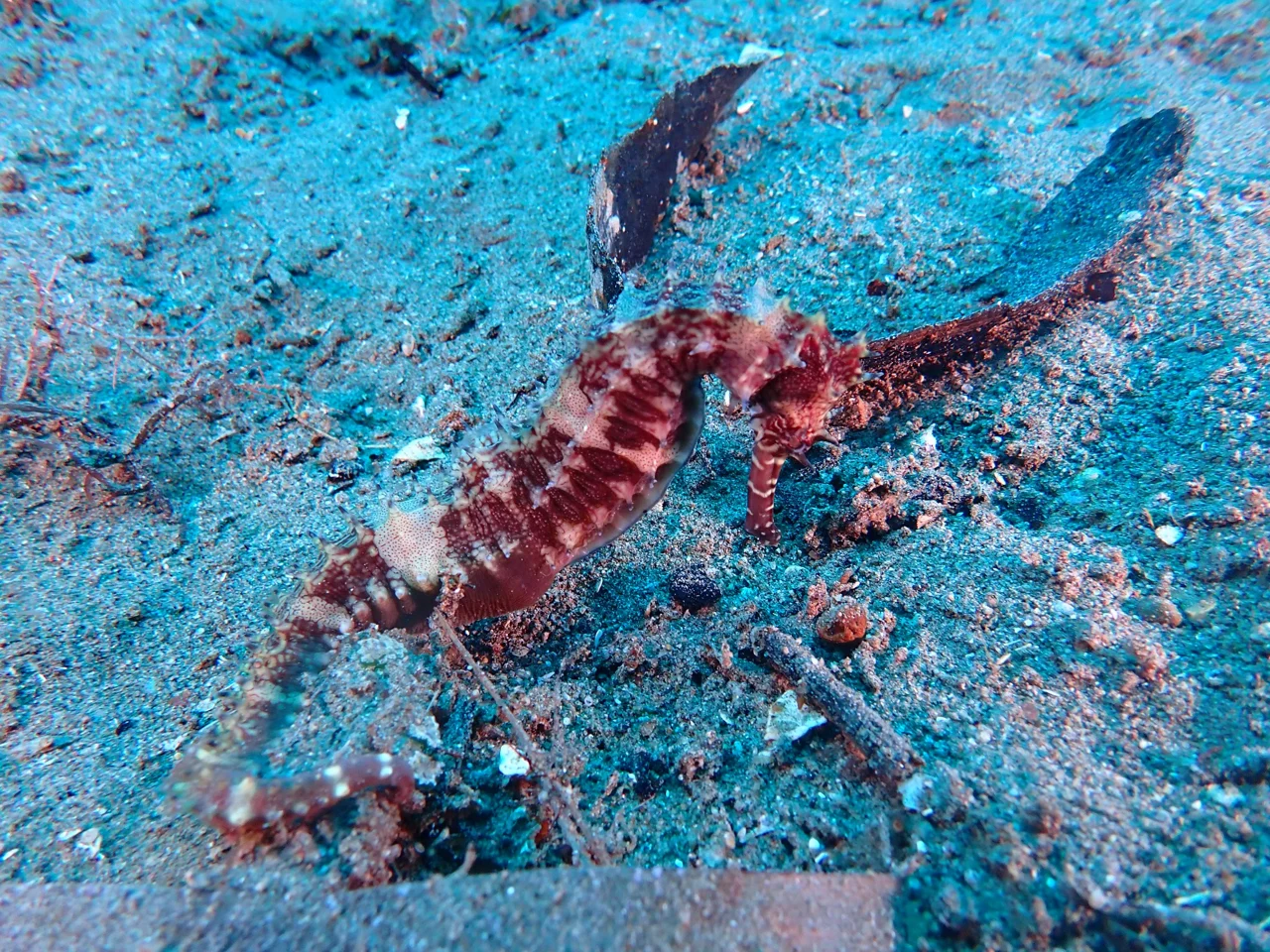
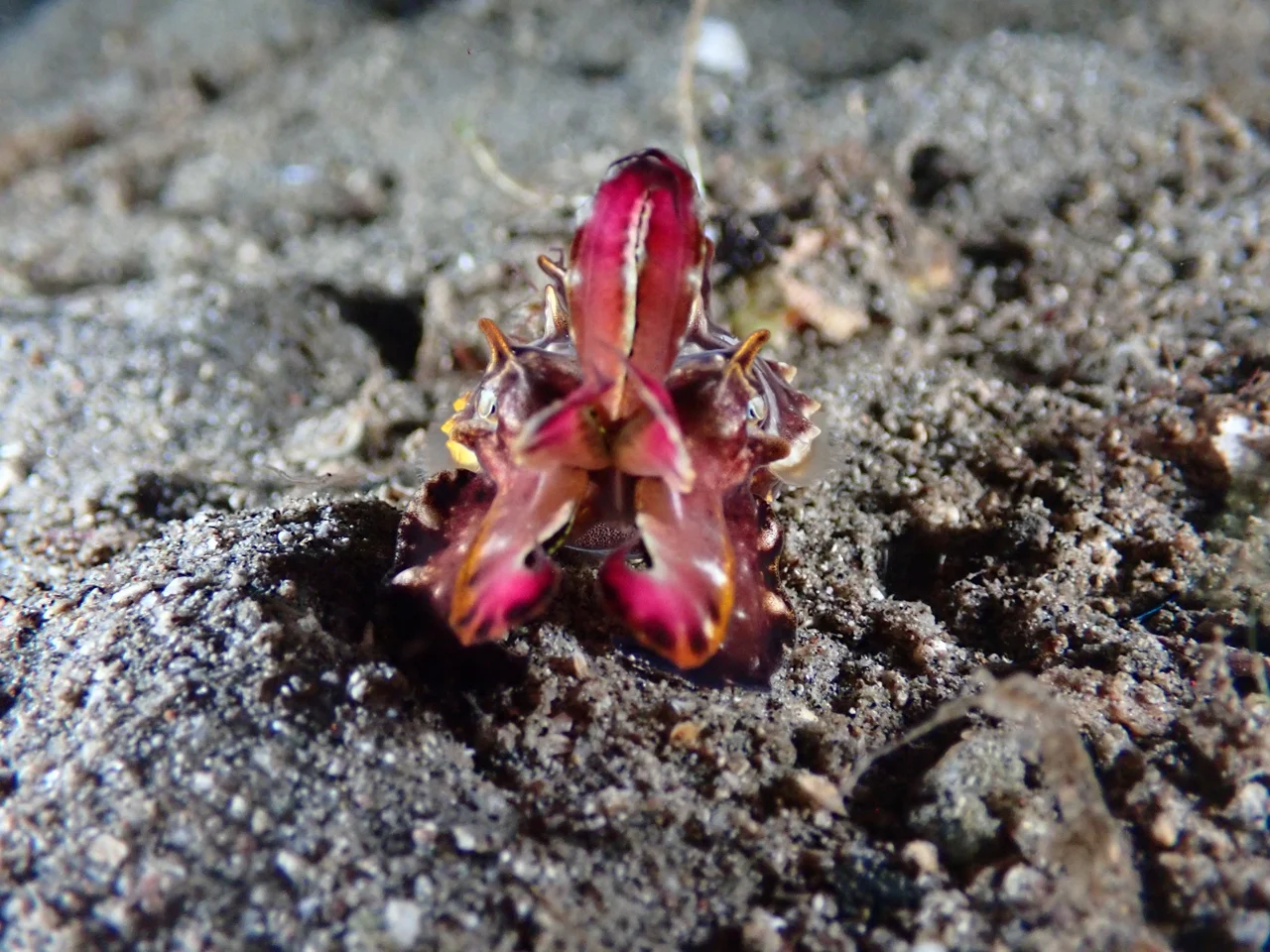
There are several kinds of seahorse and octopus to look for here. For instance, a frogfish can blend into a patch of sponge, while a bright nudibranch can stand out against the sand. A flamboyant cuttlefish is a particular favourite of ours, especially when you can watch it move across the seabed.
Leave a little room in your dive for looking up. We often see turtles in Dauin, and it’s easy to miss one when you have your eye on a tiny subject.

Night diving in Dauin
There’s plenty to photograph by day. Even so, the dive we most look forward to is the one after dark. Because your torch lights a small patch of sand at a time, even a familiar site looks different. A flicker of movement near a shell can be the first thing that gives an octopus away.
One of the pleasures here is seeing just how differently octopuses use the seabed. In our photos, one peers out from a pale shell while another is almost the same colour and texture as its shelter.
If you’re choosing between a day dive and a night dive, we’d make time for both. Knowing what a site looks like in daylight makes the changes after dark all the more striking.
What to expect when diving in Dauin
Most of our diving here is between 15 and 25 metres. Black sand makes up most of the seabed, broken up by small patches of coral and seagrass. For example, we look along the edges where seagrass gives way to sand.
For photographers, the best skill to bring is steady buoyancy. Hover clear of the sand and give the diver beside you space. Otherwise, one fin kick can hide the animal you both came to see.
Tell Steve about your recent dives and what you’d like to photograph. Then we’ll talk through the sites and the day and night dives that suit you.
Make Dauin part of your Philippines diving holiday
Dauin is the macro stop on our three-centre Philippines safari. It’s a lovely change of scale after the thresher sharks of Malapascua and the sardine schools of Moalboal. Here, a single shell can hold your attention for minutes.
Tell us which animals you most want to see, and whether you’d like to spend more time photographing them by day or looking for them after dark.
Your questions about diving Dauin
What can I see in Dauin?
We look for seahorses, octopuses, frogfish, nudibranchs and flamboyant cuttlefish. We also see turtles frequently. What turns up varies from dive to dive.
How deep are the dives?
Most of the diving we do in Dauin is between 15 and 25 metres. However, depths vary by site, so we’ll cover yours in the briefing.
Is Dauin worth diving without a camera?
Absolutely. Watching an octopus slowly emerge from a shell is reason enough to stop. You can spend the whole encounter watching what it does.
Is a night dive worth including?
Yes. We love the daytime macro dives, but Dauin really comes alive at night. Ask us about including both in your holiday.
Come diving in Dauin with us
Whether it’s your first glimpse of a flamboyant cuttlefish or time to photograph seahorses, tell Steve what’s on your wish list. Together, we can plan your time in Dauin.