Macro Marine Life Guide
Our macro marine life guide is an invitation to slow down and look closely with us, because some of the most interesting animals on a dive are the easiest to swim past.
A patch of sand may not look very exciting at first. Then our guide points out an eye, a tiny movement or a shape you had not noticed, and suddenly there is an animal in front of you. That change in the way you look is what we want to share.
You do not need to arrive knowing all the names. Start here with the animals and what makes them interesting, then explore our Alor macro page to see how we enjoy the diving together.
Macro marine life guide: names and groups
Macro marine life: a way of looking
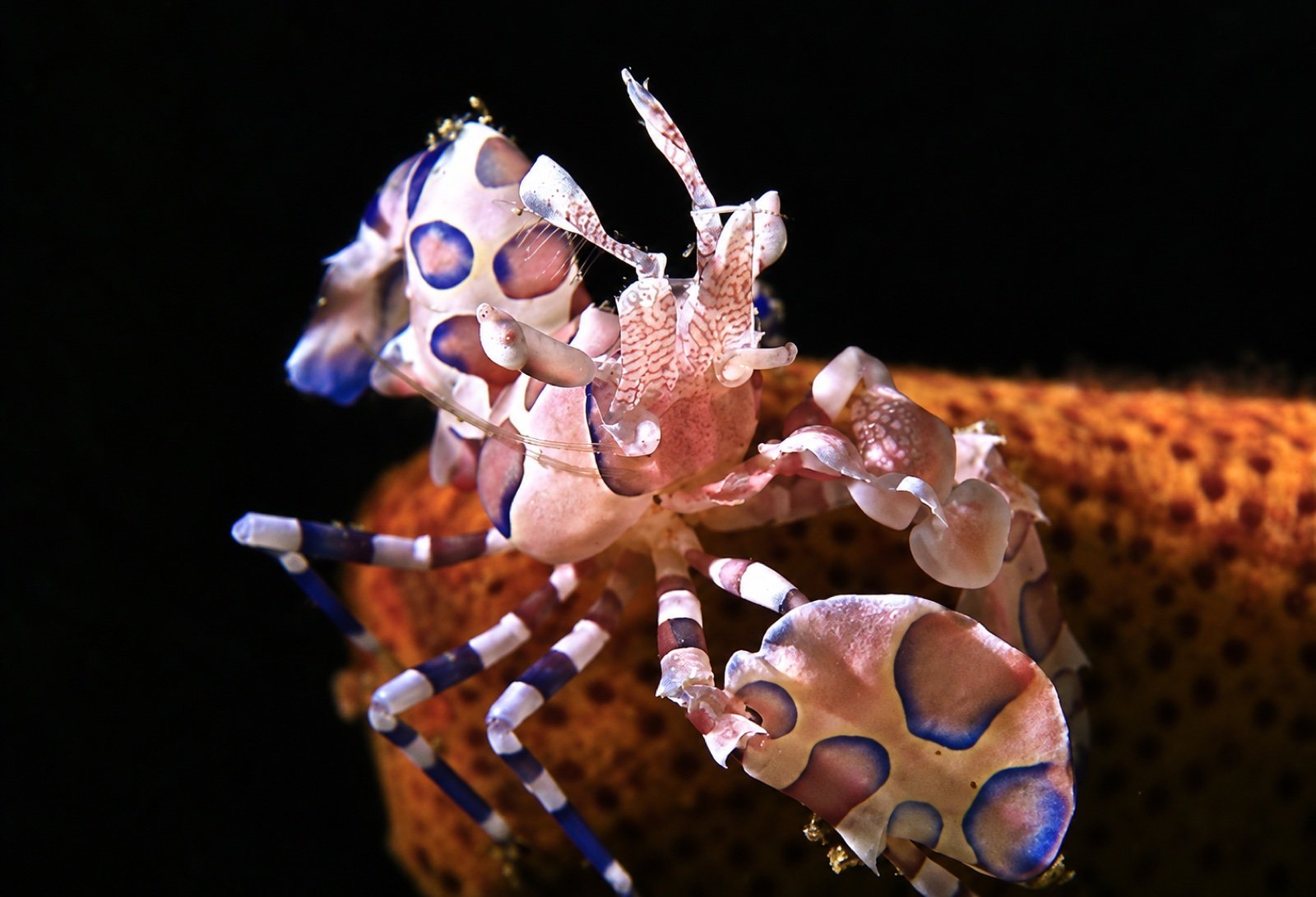
The word macro comes from the language of close-up photography. However, it is not a biological family: a tiny shrimp, a sea slug and a small fish can all be macro subjects.
So, there is no single scientific name for macro marine life. We use the name of the actual animal whenever we can identify it confidently.
A guide to useful scientific names
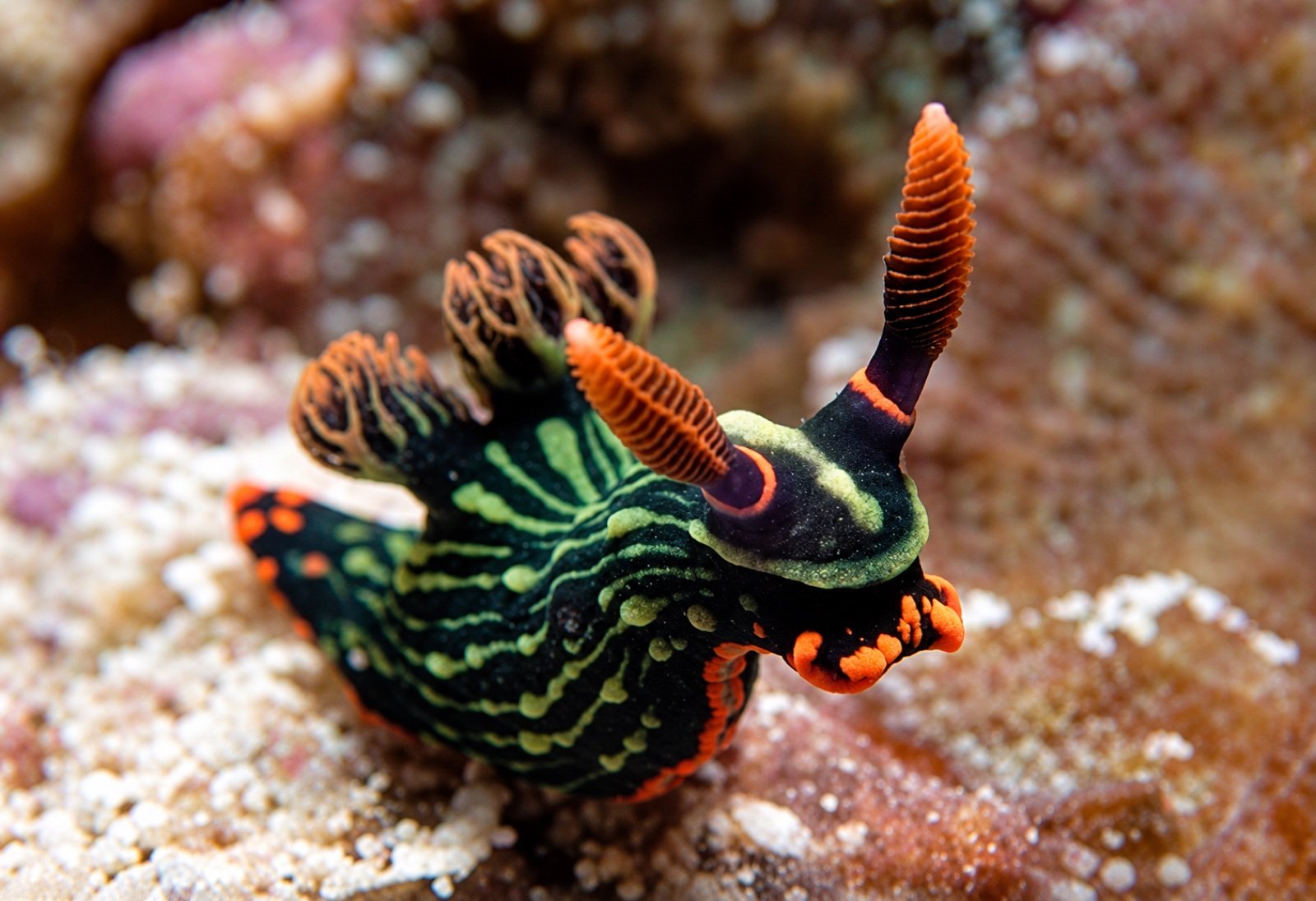
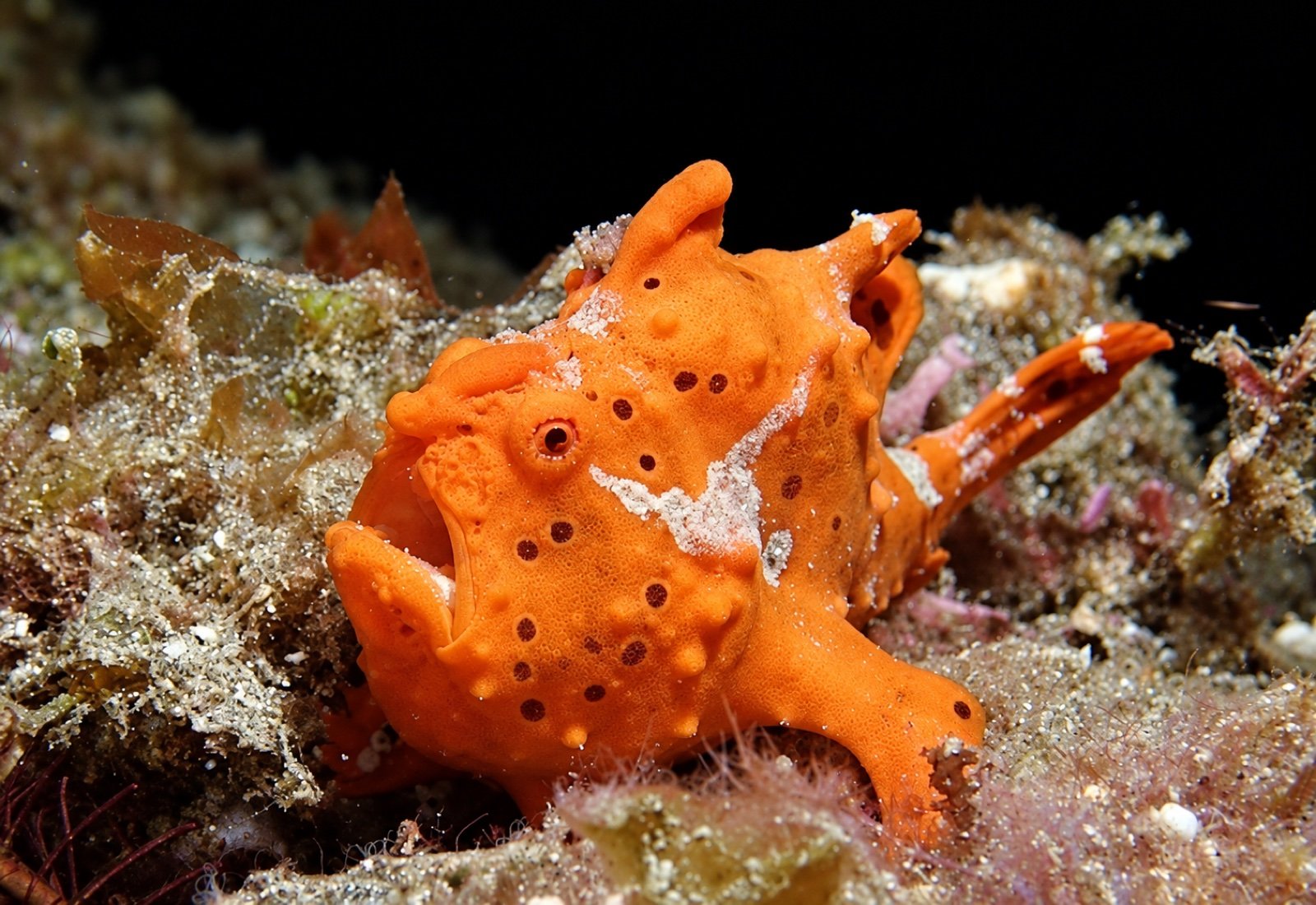
The striated frogfish is Antennarius striatus; its genus name refers to the antenna-like lure. Nudibranch means naked gill, although the appearance of the breathing structures differs across the group.
Seahorses belong to Hippocampus, a name with roots in horse and sea-monster imagery. These names offer memorable clues, but a photograph may still need specialist identification.
- Meaning of macro
- A close view of small subjects
- Frogfish example
- Antennarius striatus
- Seahorses
- Genus Hippocampus
- Nudibranchs
- A group of marine sea slugs
- Reproduction
- Varies greatly among groups
- Where we go
- Alor and Dauin
Your guide to finding macro marine life
We explore small marine life in Alor and Dauin. Because habitat matters, a local guide’s knowledge can be more useful than swimming a long distance.
Our Alor holiday and Philippines holiday offer different wider experiences. You can also read about night diving in Alor, when another set of animals may become active.
A dark sandy bottom is not empty. However, we do not move rubble or animals to manufacture a sighting.
A guide to macro marine life cycles
Macro marine life on different timescales
Small does not necessarily mean young. Many nudibranchs live for months to around a year, although the species vary widely. A small fish may have a very different life ahead of it.
So when our guide points out a tiny animal, it might already be an adult. Learning which animal we are watching tells us much more than simply judging its size. That is one of the pleasures of taking your time on these dives.
Life begins beyond the photograph
Many marine animals pass through a drifting larval stage before settling into a habitat. So, their adult appearance can be quite different from the early form.
As a result, a familiar patch may change between visits. Food, breeding and settlement all influence what we find, rather than the reef maintaining a fixed display.
Macro marine life guide to eggs and young
Egg ribbons and drifting rafts
Many nudibranchs lay eggs in ribbons or coils attached to a surface. Although the shape can be beautiful, it is a living nursery rather than something to handle.
In contrast, striated frogfish use another method: eggs are released in a buoyant, mucus-bound raft and fertilised outside the female. However, this example is not a rule for every small fish.
The seahorse exception
In seahorses, the female transfers eggs into the male’s brood pouch. Afterwards, he carries the developing young and eventually releases them as tiny seahorses.
The length of this pregnancy varies with species and conditions, often lasting a few weeks. It is a striking reminder that parental roles are not identical throughout the animal kingdom.
Macro marine life feeding guide
A frogfish sitting still can be hunting. Its lure, formed from a modified dorsal spine, can attract prey close enough for a sudden opening of the mouth. So give it time before deciding that nothing is happening.
A nudibranch has a different approach. Depending on the species, it may feed on sponges, hydroids or other animals, often with a very particular diet. The surface it is sitting on may help explain why we found it there.
Meanwhile, small shrimps and other crustaceans have their own roles, as hunters, scavengers or partners of other animals. We look at the surroundings as well as the subject. I want you to see a living animal in its home, with more to discover than its colour or shape.
Macro marine life guide to camouflage
Sometimes the hardest part is seeing the animal at all. A frogfish can blend into a sponge-like background, while other creatures are transparent, buried or tucked away. Bright colours can have another purpose, but they do not all tell the same story.
Pause where the guide indicates and let your eyes settle. A small movement may reveal a mouth, an eye or a leg. Once you recognise the outline, it becomes much easier to appreciate the whole animal.
While you look, keep your fins, camera and gauges clear of the bottom. There may be more life beneath you that neither of us has noticed yet. We adjust our own position carefully and leave the creature where it is.
Macro marine life conservation guide
Care for the habitat around the subject
Pollution, sediment disturbance and damage to reefs or seagrass can affect small animals as well as large ones. After all, their food and shelter may occupy only a small area.
So, we avoid touching coral, kneeling on the seabed or digging for animals. Also, we give other divers time to look without crowding the subject.
The value of returning with local guides
This is where I really value our local guides. In Alor and Dauin, knowing which patch to search and what to look for can make the difference between swimming past an animal and spending time watching it. A frogfish may blend into its background, while a nudibranch’s food can give us a clue to where it is hiding.
I want you to enjoy that discovery with us. We take time to help you see the outline, recognise the animal and notice what it is doing. You can read more about our research and the local relationships behind our trips.
Macro Marine Life Guide: your questions
Does macro mean a particular species?
No. Macro describes looking closely at small subjects, rather than a particular species or family. On the same dive, we might be looking for a fish, a shrimp or a nudibranch, each with a very different way of life. Also, small does not necessarily mean young; the tiny animal in front of you could already be an adult. That is why we help you understand what you are seeing, not just point at something small. You do not need a camera to enjoy it. Give yourself time to look, and the details become part of the dive.
Are nudibranchs worms?
No. Nudibranchs are molluscs, related to snails and other sea slugs. Their colours and body shapes vary greatly, so two animals that look very different may both be nudibranchs. Many have particular diets, feeding on animals such as sponges or hydroids. Consequently, the surface beneath one can help explain why it is there. When we find a nudibranch, take a moment to look at its surroundings as well as its colour. Our guides help you notice those details, while we leave the animal and its food undisturbed.
Do male seahorses really carry the young?
Yes. The female transfers her eggs into the male’s brood pouch, and he carries the developing young until they are ready to emerge. He then releases tiny seahorses into the water. The length of the pregnancy depends on the species and conditions, often lasting a few weeks. So, there is no single timetable that applies to every seahorse. It is one of the fascinating differences we can talk about when exploring small marine life. However, finding a seahorse does not mean we will witness a birth; we enjoy the animal and behaviour in front of us.
Should we move an animal for a photograph?
No. We leave the animal where we find it, even if another position would make a cleaner photograph. Its resting place may also be its shelter, food source or camouflage. Instead, we adjust our own position carefully and keep fins, cameras and loose equipment clear of the bottom. If you cannot get the angle without disturbing the animal or its habitat, enjoy watching it and leave that photograph. Also, give other divers time to look. I want everyone to enjoy the discovery without crowding the subject or stirring up the sand around it.
Where can we enjoy macro diving with you?
We explore macro life in Alor and in Dauin as part of our Philippines trips. Our Alor holiday and Philippines holiday give you different wider experiences, so tell me what else you would like from the trip. You might want time for photography, enjoy searching for unusual animals or simply be curious about this style of diving. We can explain how the macro dives fit into each holiday and help you choose. Our local guides bring the knowledge of the habitats, while we help you slow down and get more from what you find. Individual sightings vary, so the enjoyment is in the search as well as the discovery.
Come and discover the small things with us
If you like the idea of slowing down and discovering the small things, tell me. We can talk through Alor and the Philippines, including Dauin, and explain how the macro diving fits into each holiday.
You do not have to be a photographer or know every creature’s name. Bring your curiosity, and come and enjoy the search with us and the local guides who help us see so much more.
Explore our Alor diving holiday