
Dolphin Guide
Our dolphin guide brings together the animals’ fascinating lives and the experience behind our trips, so you can get more from your time in the water with us.
I have been on well over 100 dolphin snorkelling trips. From that experience, I know how much timing, patience and the way we behave in the water matter. We also want to share that knowledge with you, as well as the excitement of seeing dolphins in their own environment.
When you understand a little about how dolphins live, you start looking at the whole pod. A mother with a calf, a group resting or dolphins heading out to feed all have different needs. Here we explain what is happening; our dolphin encounter page helps you plan the experience with us.
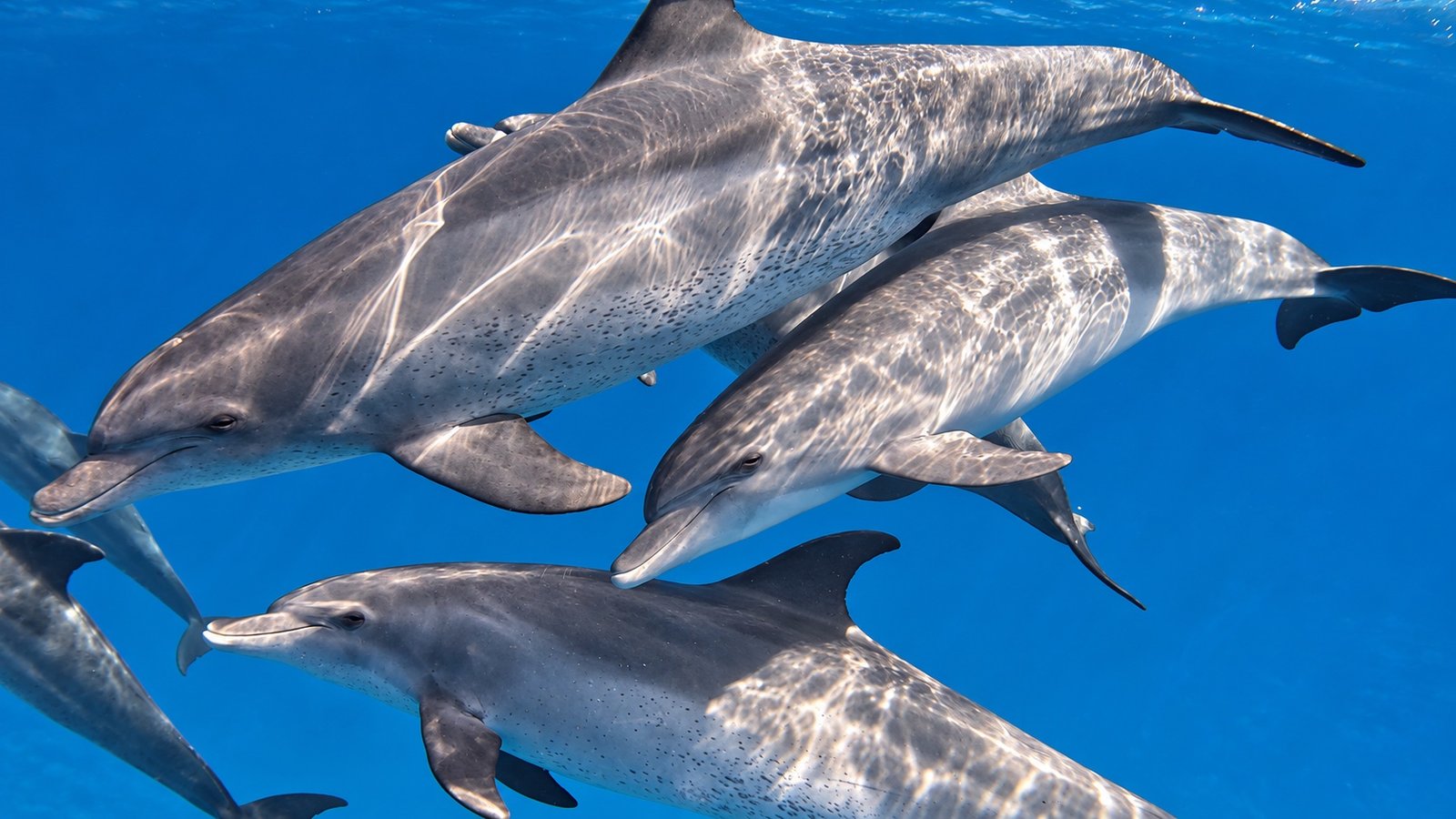
Dolphin guide: names and identification
A guide to dolphin names
Let’s start with the names, because dolphins are not all the same. Bottlenose dolphins get their familiar name from the shape of their beak. Spinner dolphins, meanwhile, are named after those turning leaps that make them so recognisable.
The spinner’s scientific name is Stenella longirostris; the second part refers to its long beak. However, we would not identify an unfamiliar dolphin from a leap alone. Instead, we look at its shape and other features too.
Getting to know the different species
The common bottlenose dolphin is Tursiops truncatus. Its relative, the Indo-Pacific bottlenose dolphin, is Tursiops aduncus. For a long time these were grouped together, but they are recognised as separate species.
That distinction matters when we explain their lives. For example, dolphins do not all have the same lifespan or pregnancy length. We name the species below so you know which animal we are talking about.
- Animal group
- Marine mammals
- Common bottlenose
- Tursiops truncatus
- Indo-Pacific bottlenose
- Tursiops aduncus
- Spinner dolphin
- Stenella longirostris
- Young
- Live-born calves fed on milk
- Where we go
- Egypt’s Red Sea
Your guide to dolphin encounters in Egypt
Egypt is our first recommendation if you would like to include dolphins in your holiday. Most of our encounters have been here, and Hurghada is where we arrange our private snorkelling trips. We have also been fortunate to see dolphins in Bali, Alor, Borneo and Mexico.
On a scuba dive, a pod can appear out of the blue, but we cannot plan its arrival. For a dedicated dolphin experience, we recommend our private speedboat snorkelling trip. Our experience is that it gives us a much better opportunity than waiting for dolphins to appear during a reef dive.
We can also build that outing into your Egypt diving holiday. Have a look at our Egypt destination page too, then tell us what you would most like to do. We will talk you through the options personally.
A guide to dolphin growth and lifespan
Growing up beside a mother
A small calf swimming beside an adult gives you a lovely reason to slow down and watch. Its life starts with a birth in the water, followed by the need to reach the surface for air. At first, its mother’s milk provides its food.
As it grows, the calf learns to find prey and live alongside other dolphins. Those early relationships are important, which is why we give mothers and young plenty of room. We never position ourselves between them.
How long can a dolphin live?
Common bottlenose dolphins can live for 40–60 years, while the reported lifespan of spinner dolphins is roughly 20–25 years. However, these are examples for those species; an individual animal’s life depends on many things.
So the dolphin passing us could have many years ahead of it. We want our guests to enjoy that brief meeting while leaving the animal free to carry on with its day.
Dolphin guide to pregnancy and calves
From mating to a new calf
Dolphins are mammals, just as we are. They mate in the water, and the calf develops inside its mother, receiving nourishment through a placenta. They do not lay eggs.
Usually there is one calf at a time, although twins occur very occasionally. After birth, the mother feeds her young with milk. Understanding that family connection adds something special to watching a pod together.
Pregnancy is only the beginning
A common bottlenose dolphin’s pregnancy lasts about a year; for a spinner dolphin, it is about eleven months. However, the mother’s commitment does not end when the calf is born. Nursing and learning continue afterwards.
That is why we ask you to give a mother and calf space, even when you are keen to get a photograph. We can enjoy watching them without interrupting that care.
Dolphin feeding guide
Dolphins are hunters. Fish and squid are important prey, although the menu varies between species and places. Some dolphins hunt together, while different populations have developed their own ways of finding and catching food.
One of their remarkable tools is echolocation. A dolphin produces clicks and uses the returning echoes to gather information about its surroundings and prey. In other words, it is another way of finding out what is ahead, alongside its other senses.
Feeding also helps explain why a pod’s routine matters. Some spinner populations feed offshore at night, then rest in sheltered coastal water during the day. So a group that seems easy to approach may be taking the rest it needs. We look at what the dolphins are doing and follow our local team’s guidance before deciding how to watch them.
A guide to dolphin breathing and communication
When you are watching dolphins with us, take time to notice how they move together and return to the surface. They breathe air through the blowhole on top of their head. Unlike fish, they cannot take oxygen from the water through gills.
Whistles, clicks and body movements are all part of their communication. However, we cannot translate every sound or leap into a message for us. A dolphin’s familiar mouth shape does not tell us that it wants to be touched, either.
From our experience, patience and a calm group make a real difference to an encounter. Give the dolphins room and let them choose whether to come closer. If they move away, we let them go. The sea is their home, and we are the visitors.
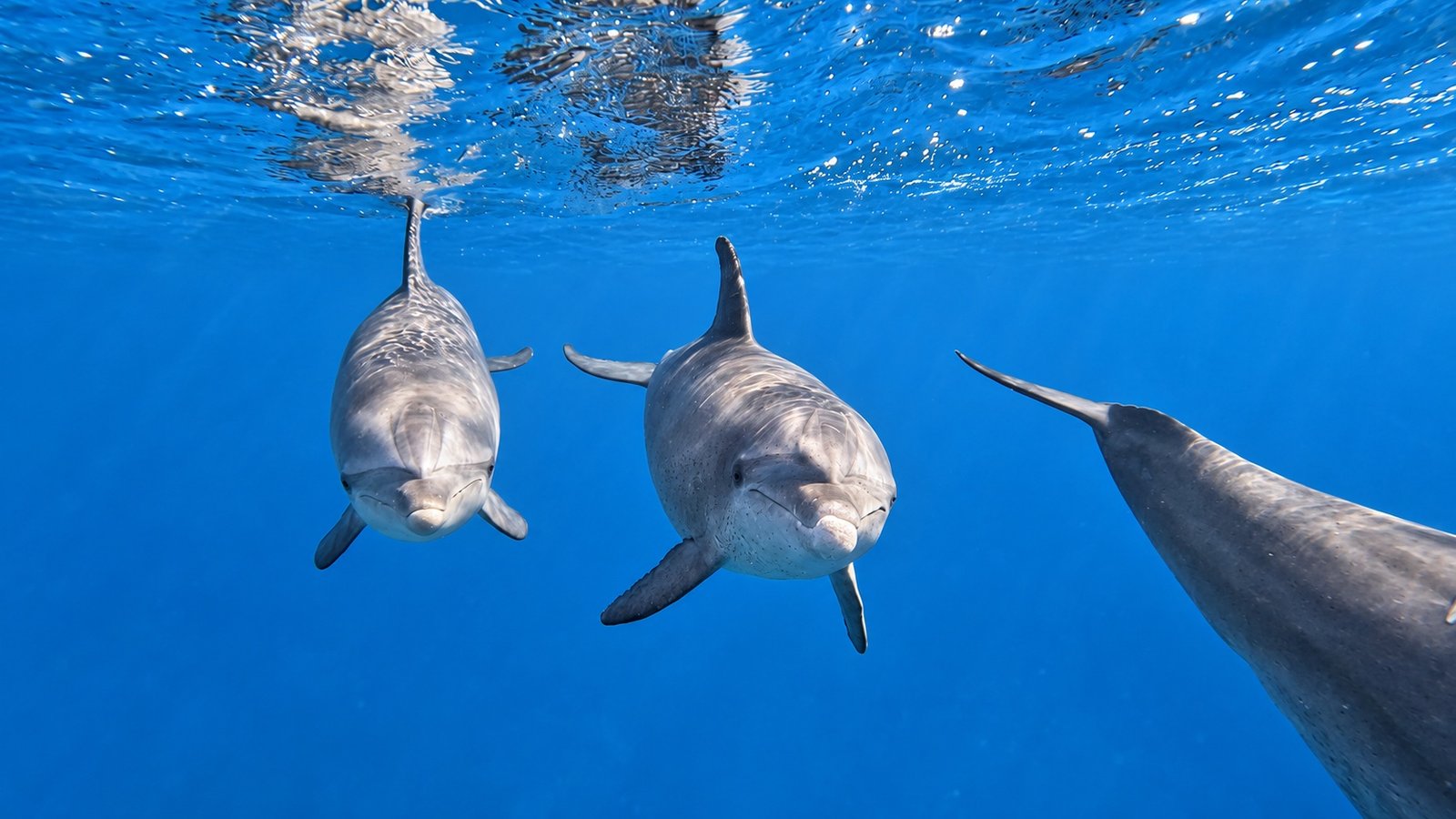
Dolphin conservation guide: looking after the animals we visit
Enjoying the encounter with care
Fishing gear, pollution and underwater noise can all affect dolphins. We also have a responsibility for how our own visit affects them. Resting, feeding and looking after calves are essential parts of their day.
On our trips, we do not chase, touch or feed dolphins. We keep their route clear and follow the guide’s directions. Sometimes watching from the boat is the right choice, and we will explain that to you.
The people and experience behind your trip
Our knowledge comes from spending time in these places and working with the people who know them. Over the past three to three-and-a-half years, we have returned regularly to our destinations, often spending a month exploring and diving with local people. My wider firsthand research covers seven years.
In Egypt, we combine that experience with our local team’s years of daily knowledge of these waters. We use it to plan your holiday and prepare you for the encounter. You can also read more about our research, or simply speak with Steve about what you would like to experience.
Dolphin Guide: your questions
Are dolphins fish?
No. They are mammals, so they breathe air, give birth to live calves and feed them milk. That is why you will see them returning to the surface.
Do dolphins sleep?
Yes, although they rest differently from us. For example, a slowly moving group can be resting. We give it space and follow our guide’s advice about how to watch.
Is every bottlenose dolphin the same species?
No. Common and Indo-Pacific bottlenose dolphins are separate species. The familiar shape is a starting point, but we need more detail to identify them properly.
Does jumping mean a dolphin wants to play with us?
Not necessarily. Dolphins leap for different reasons. We enjoy the sight without assuming it is an invitation to approach or touch them.
Can you help us plan a dolphin experience?
Yes, and we would love to. Tell us who is coming, your confidence in the water and whether you would like to dive as well. Our Hurghada dolphin trip details are a good starting point; then we can talk through your own plans.
Come and share our Red Sea with us
If dolphins are one of the reasons you want to come to Egypt, tell us. We want to hear what you are hoping for, whether that is your first snorkelling experience or a diving holiday with a dolphin trip included.
You will be speaking with people who have spent time in the water here and care about the holiday you have. We will explain what we recommend, help you prepare and make sure you understand what the experience involves. Then come and enjoy the Red Sea with us.
Explore our Egypt diving holiday