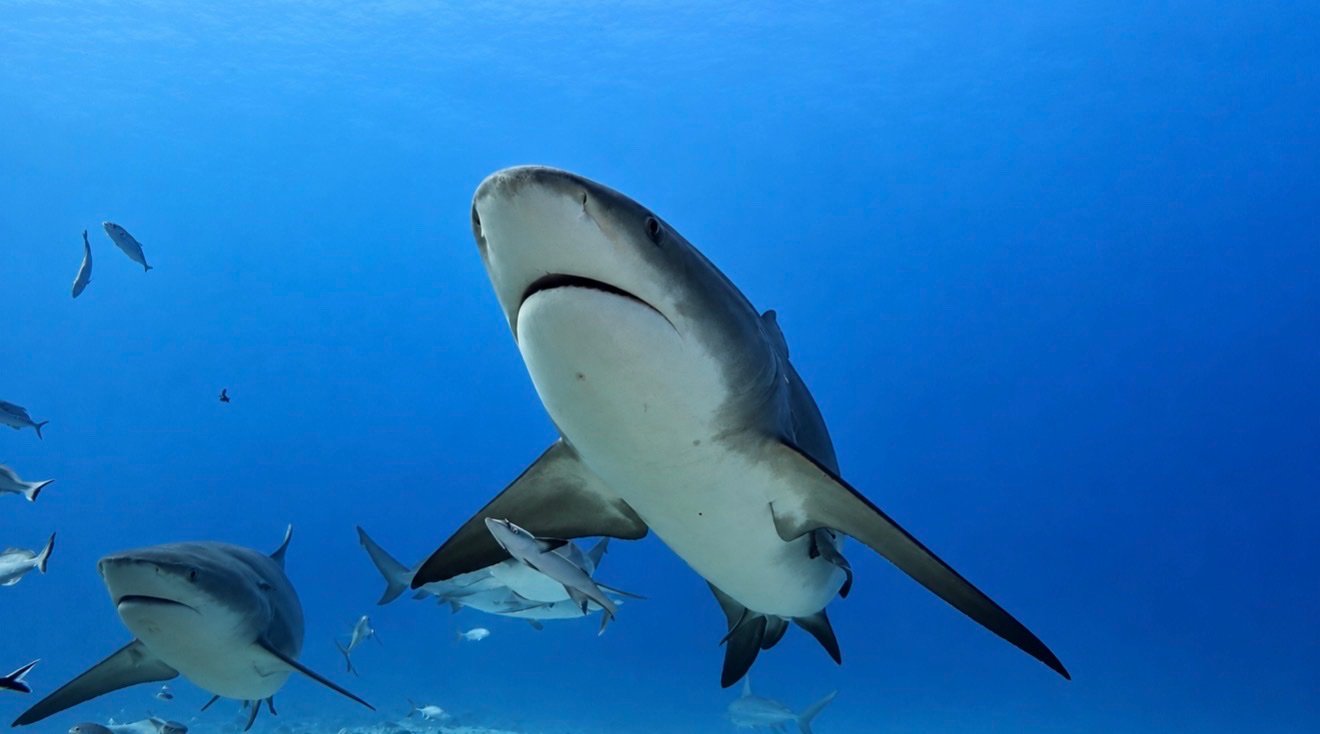
Bull Shark Guide
Our bull shark guide gets you ready to understand the powerful animals we go to see in Mexico, including how they hunt, raise new life and move between salt and fresh water.
A bull shark has a presence that stays with you. However, there is much more to appreciate than its broad head and strong body. We want you to know what you are looking at and understand why the animal behaves as it does.
I want the knowledge to be part of your holiday, alongside the excitement of the dive. Start here with the animal, then read our bull shark diving page for the encounter and the experience you need.
Bull shark guide: names and history
Understanding the scientific name
Carcharhinus leucas is the bull shark’s scientific name. The genus draws on Greek roots meaning sharp and nose, while leucas refers to white. However, scientific names do not always sound like the animal in front of us: this shark’s snout is notably broad and blunt.
The species was described in 1839 under an earlier genus name. Because scientists review relationships, taxonomic names can change.
A guide to recognising bull sharks
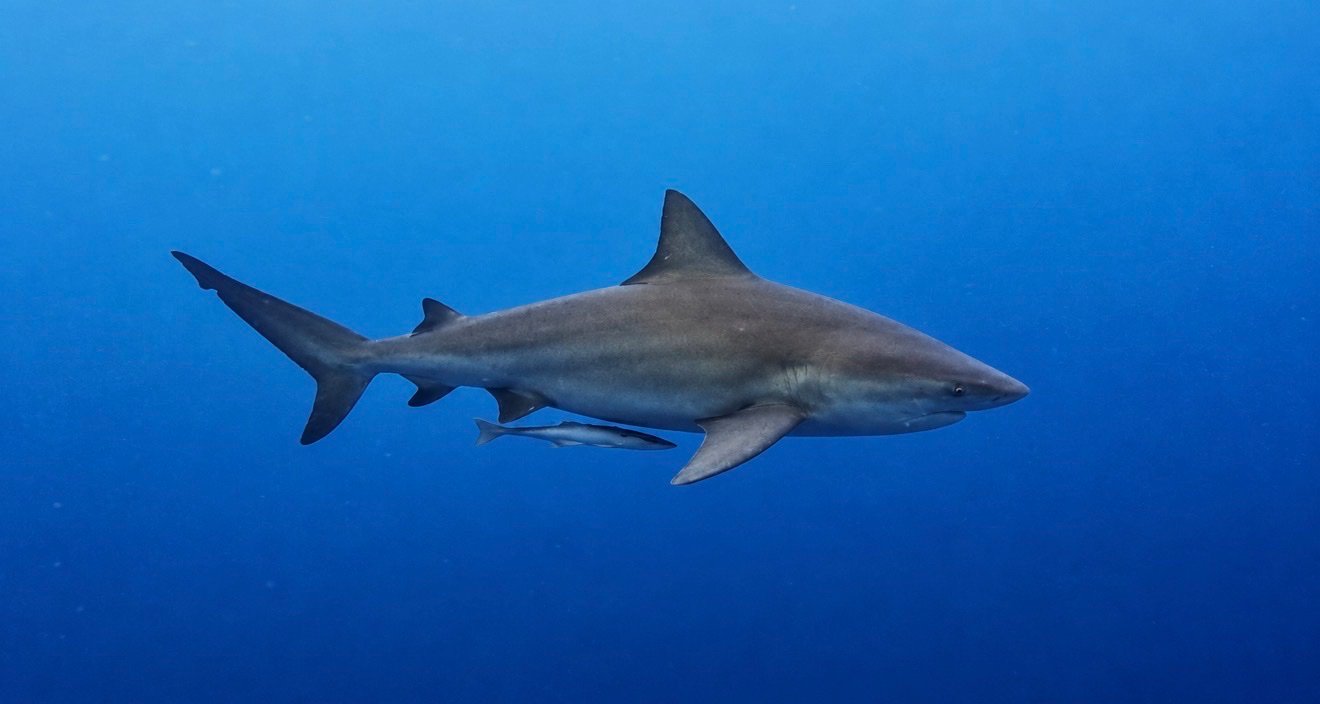
The name bull shark makes sense when you see its stocky build. Look for the broad head, small eyes and large first dorsal fin, followed by a much smaller second fin.
However, we do not identify a shark just because it is grey and has a large fin. Several species can look similar. Instead, we look at the whole animal and draw on the local team’s knowledge, helping you understand the differences as well.
- Scientific name
- Carcharhinus leucas
- Family
- Carcharhinidae
- Habitat
- Coasts, estuaries and some rivers
- Food
- Mostly fish, including other sharks
- Reproduction
- Live pups with a placental connection
- Where we go
- Playa del Carmen, Mexico
Your guide to seeing bull sharks in Mexico
For our bull shark dives, we go to Playa del Carmen on Mexico’s Caribbean coast. Because timing and conditions matter, we plan with local people who know the seasonal encounter.
Visit our Playa del Carmen location page for the setting and our Mexico destination guide for the wider country. Then explore the Mexico diving holiday. A species’ worldwide range is not a guarantee that it can be seen at every coastal dive site.
A guide to the bull shark lifecycle
Growing up in a nursery
The shark we see off the coast may have started life in very different surroundings. Young bull sharks can use shallow estuaries and rivers as nursery habitat, where they find food and grow.
However, nursery does not mean a parent stays there to care for them. The pups are independent after birth. Thinking about those early habitats helps you see why protecting a shark involves more than looking after the place where we dive.
How long do bull sharks live?
Bull sharks can live for more than 25 years. However, estimates of maturity vary between populations and studies, so one age is not a fixed rule worldwide.
Also, females generally mature later and grow larger than males. So, a healthy population needs more than this year’s pups; it also needs adults that survive long enough to breed.
Bull shark guide to mating and pregnancy
How do bull sharks mate?
Like other sharks, a male uses a clasper to transfer sperm inside the female. After fertilisation, pups develop within her body, nourished through a yolk-sac placenta.
In contrast to sharks whose embryos rely entirely on yolk, bull shark pups receive this continuing placental nourishment. So, bull sharks give birth to live young and do not lay reef egg cases.
Pregnancy and newborn pups
Pregnancy lasts roughly a year, with estimates varying among populations. For example, published litter records include one to thirteen pups. At birth, pups are commonly around 60–80 centimetres long.
After birth, each pup swims and feeds independently. Although shallow nursery areas can offer some shelter from larger predators, survival is never assured.
Bull shark feeding guide
Bull sharks eat a range of prey, including bony fish, rays and smaller sharks. In other words, they are adaptable hunters rather than animals depending on one food source. Also, their broad, serrated upper teeth and narrower lower teeth help them grip and cut food.
A shark cruising slowly can also accelerate when it hunts. So we do not confuse a relaxed-looking pass with an animal that cannot move quickly. Understanding that is part of treating it with proper respect.
What we want to share with you is the real animal. There is no need for frightening stories or exaggerated claims. Listen to the briefing, follow the guides and take the time to watch what the shark is actually doing.
A guide to bull sharks in fresh and salt water
One of the most interesting things about bull sharks is their ability to use fresh water. Their bodies adjust water and salt levels, allowing them to move between the sea, estuaries and some rivers. Most sharks cannot do this in the same way.
That does not mean every river contains bull sharks, or that they all spend their lives inland. Coastal water remains important. Instead, it shows us how adaptable this species can be.
On our dives, we watch the sharks in front of us: their direction, spacing and movement. Our local guides bring their knowledge of the encounter, and we follow their positioning. If a shark passes once, we enjoy that moment without assuming it will return on the same route.
Bull shark conservation guide
Protecting more than the dive site
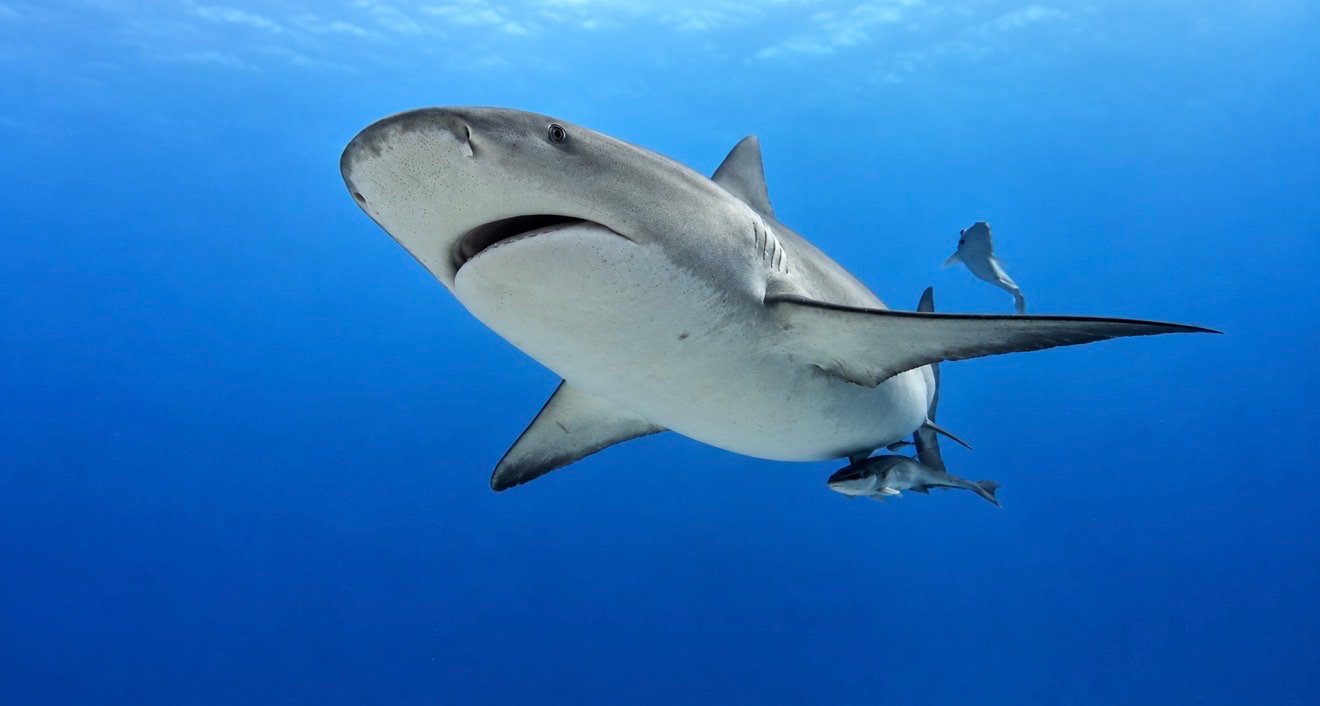
Coastal development, fishing and damage to nursery habitats can affect bull sharks. A shark may use different places as it grows, so protecting an adult viewing area alone leaves other parts of its life exposed.
So, we explain the animal’s lifecycle before focusing only on a dramatic photograph.
Learning from time in the water
I have spent seven years on the wider firsthand research behind Dive UK Travel. Over the past three to three-and-a-half years, we have also returned regularly to our destinations, often spending a month exploring and diving with local people.
Our guides bring years of daily experience in these waters. For bull sharks, that means talking carefully about the encounter, the briefing and the experience you bring to the dive. You can read more about our research approach.
Bull Shark Guide: your questions
Can bull sharks live in freshwater?
Yes. They can tolerate freshwater and move through some river systems. However, they also live in coastal marine and estuarine habitats.
Do bull sharks lay eggs?
No. Developing pups receive nourishment through a placental connection, and the female gives birth to live young.
Does the mother care for newborn pups?
The pups are independent after birth. Nursery habitat provides a place to grow, rather than continuing parental care.
Are bull sharks the same as blacktip reef sharks?
No. They are separate species, with different body shapes, habitat use and life histories.
Can we join you for a bull shark dive?
Read our bull shark encounter page and Mexico holiday. We discuss your diving experience and suitability before planning the trip.
Come and see bull sharks with us in Mexico
If you would like to see bull sharks with us, let’s talk about your diving experience and what you want from your Mexico holiday. We will explain the encounter carefully so you know what to expect before you arrive.
Then come and enjoy the diving and the wider destination with us. We bring together the people we trust and the planning that makes the trip work, while helping you understand the animals you have travelled to see.
Explore our Mexico diving holiday